
By Richard McCulloch
The Question No Résumé Could Answer
Ambitious people follow a familiar ritual when they gather. Someone eventually asks, “Who are you and how did you get there?” The answers usually arrive in polished succession: The schools attended, the promotions earned, the companies built, the milestones reached. We recite our résumé because it explains what we have done.
Unfortunately, it rarely explains who we are. When internationally acclaimed Miami muralist Addonis Parker was commissioned to paint a mural on the facade of OneUnited Bank, he asked Teri Williams, bank president and owner, that very question. Williams began with the expected highlights: Brown University, Harvard Business School, a distinguished banking career, and ultimately helping build what is now the nation’s largest Black-owned bank.
Parker wasn’t satisfied. He wasn’t looking for a résumé.
“But, who are you?” he asked again.
Only after he pressed her, did Williams have an aha moment. She realized that before her professional accomplishments, the person who shaped everything that she had become was her great grandmother, Annie Coachman, affectionately known as Ma Honey.
Long before the term “entrepreneur” was coined, Ma Honey owned multiple businesses in Indiantown, Florida, served her neighbors, and quietly modeled the resilience and leadership that Williams would later carry into boardrooms and banking. Somewhere between rural Indiantown and the Ivy League, those lessons had faded behind her professional achievements. Williams realized that the faded lessons, and even her lost memory of the impact of Ma Honey on her success, were rooted in her shame of her small town roots.
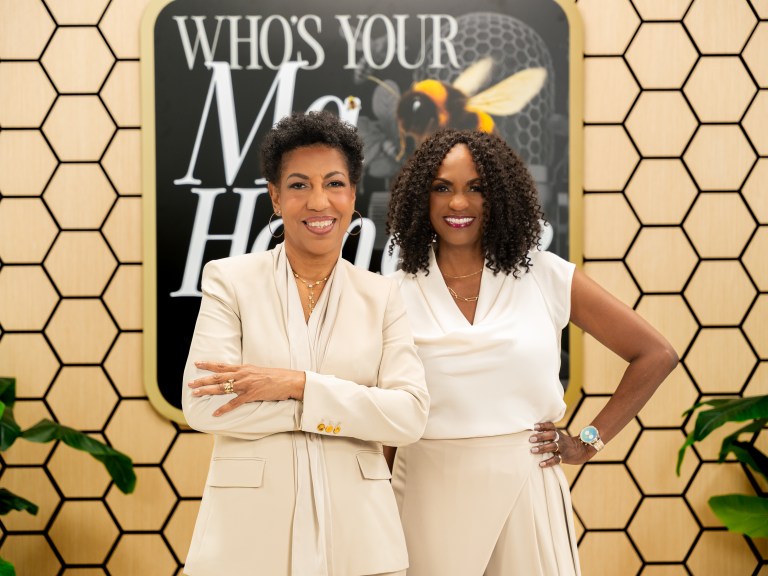
That realization inspired Who’s Your Ma Honey?, the podcast Williams now co-hosts with Suzan McDowell, CEO of Circle of One Marketing. Together they invite high profile guests to explore a deceptively simple premise: Our undeserved shame, a buried mix of guilt and stigma, which is actually the source of the resilience that drives our success.
The Stories We Learn to Hide
Williams’ story is deeply personal, but it is hardly unique.
Many successful professionals, particularly Black and immigrant professionals, learn early that moving into new spaces often requires adaptation. The challenge isn’t simply succeeding. It’s deciding which parts of ourselves feel safe enough to bring with us.
Williams recalled arriving at Brown University sporting a bright red Afro, a white tube top, and lime green hip-hugger pants; a world away from the khakis and boat shoes that defined Ivy League campus culture. Her intellect had earned her admission. Belonging felt like a different test altogether.
Author and law professor john a. powell, who leads the Othering & Belonging Institute at UC Berkeley, calls this process “othering”. He stated that it begins long before we recognize it. Before we learn to hide parts of ourselves, someone first teaches us they should be hidden.
Those messages can quietly become undeserved shame, persuading us to soften our accents, edit our histories, or distance ourselves from the people and places that shaped us in exchange for acceptance. Yet, as powell argues, belonging should never require self-erasure. Belonging asks us to bring our whole selves into the room.
That journey echoes throughout the podcast.
Addonis Parker once shortened his name to “Don” and hid his artistic name and gifts because they didn’t fit expectations for a young Black athlete the size of a football player. National Urban League President and former two-term mayor of New Orleans, Marc Morial, recalls growing up with constant reminders that he was “the other,” from segregated classrooms to assumptions that his political success belonged to his father’s legacy instead of his merit.
Different stories. Same truth. We are often handed an undeserved script long before we find our own voice. Finding that voice is how we begin to rewrite the story.
What We Carry Forward
By the time an episode of Who’s Your Ma Honey? ends, something magical happens. What begins as one person’s story gradually unfolds as a road map to their ultimate success. Every conversation traces a familiar arc: experiences of undeserved shame, reclaimed identity, unexpected strength, renewed belonging.
That realization belongs to the hosts as much as their guests.
Williams admits she still hesitates before sharing her own story because it reopens old wounds and the new pain of recognizing she left Ma Honey behind without giving her flowers before she passed. Yet she believes the discomfort is worthwhile if it helps someone else uncover their own hidden inheritance. Along the way she reached a simple but profound conclusion: Everyone has a Ma Honey. Not necessarily a person, but perhaps a place, a relationship, a lesson, or a memory that quietly shaped who we became.
For co-host McDowell, her undeserved shame emerged through her dual identity. Born in Jamaica before unwillingly moving to the United States, she spent years navigating the intersections of nationality, race, and colorism. What once felt isolating eventually became the very perspective that enabled her to build one of South Florida’s leading multicultural marketing agencies. Ironically, the same self-doubt that nearly kept her from co-hosting the podcast has become one of its greatest rewards, reconnecting her with people, places, and parts of herself she had left behind. She now proudly calls herself a Jamerican, a duality that has proven to be a unique superpower.
The pattern continues with guests like Dr. Sheena Meade, CEO of Clean Slate Initiative, who transformed the stigma of her arrest record, which was the result of a bounced check for $87.26, into a national movement, helping over 18 million people in 14 states clear their criminal records.
Time and again, what appeared to be a liability becomes purpose. Perhaps that’s why the podcast resonates so deeply.
Within marginalized communities especially, many of us inherit stories about who we are before we ever have the opportunity to decide for ourselves. We spend years overcoming labels we never deserved, only to discover that the very experiences meant to diminish us have cultivated resilience, empathy, creativity, and purpose.
Maybe that is the real question behind Who’s Your Ma Honey? is not simply “who made you?”, but what part of yourself have you been leaving out of your story?
The podcast never suggests that reclaiming identity erases pain. It suggests something quieter; that the stories we once tried to outrun may be the very gifts we are meant to pass forward.
The moment we redefine our undeserved shame and recognize it as our hidden inheritance, something changes. We become capable of doing for someone else what our own Ma Honey once did for us.