
Interviewed and written by Brad Johnson
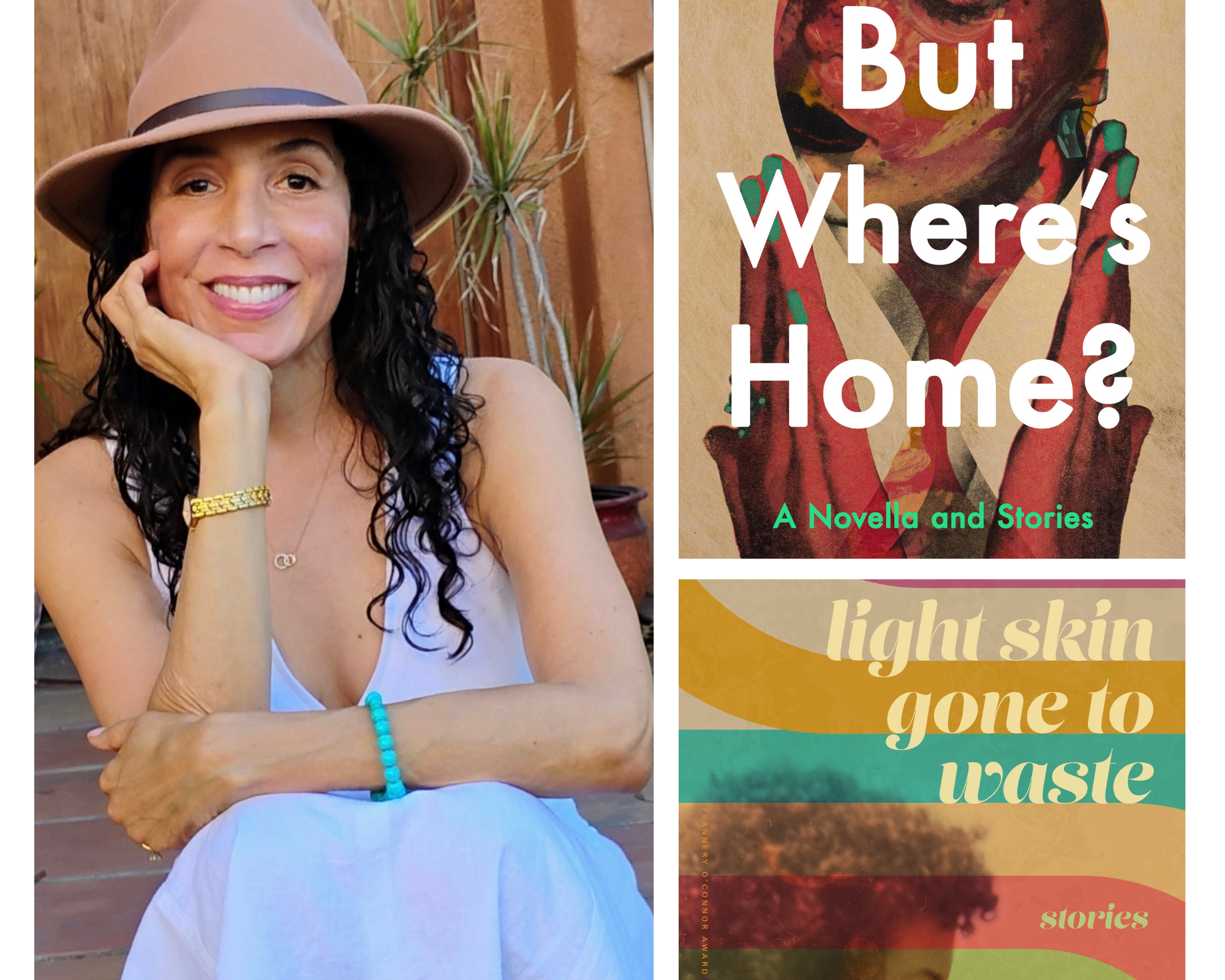
Two-time NAACP Image Award nominee for outstanding literary work Toni Ann Johnson has a new book out, But Where’s Home?, a linked story collection that won the Screen Door Press Prize for fiction. This follows Johnson’s previous collection, Light Skin Gone to Waste, winner of the Flannery O’Connor Award for short fiction. Both books follow the Arringtons, an upper-middle-class Black family living in a white, mostly working-class town in New York State. I interviewed Johnson back in 2022 for my podcast Corner Table Talk, and subsequently, she became a manuscript coach on my memoir in progress about growing up in the restaurant business. Recently, we caught up and continued our conversation.


You’ve described your work at times as “autobiographical fiction.” How do you balance drawing on your lived experience with the demands of storytelling—and has that balance shifted as external recognition has grown?
Toni Ann Johnson: The stories are inspired by real events, memories, and things I heard growing up. Some of the content is imagined, but based on real people and things that could have happened or did happen, though not exactly as written. I have to keep the material engaging—funny, moving, or intriguing, which may require altering events in ways that make them more dramatic. Autobiographical fiction differs from memoir, wherein you can alter some things, but you can’t make up something that never happened at all. I do include things that didn’t happen. I’ve also added elements of magical realism. For example, Grandma Emily narrates a story from after her death. Maddie narrates one story from before her birth. The approach makes clear that these are fiction, but much of what happens within the stories is inspired by real events. And the behaviors of the family members—particularly the narcissistic parents—are authentic. I don’t think the balance between fact and fiction has shifted much. The way I’ve approached the storytelling has changed only minimally as I’ve worked with different editors.
Toni Ann, the question in your title But Where’s Home? haunts me. Like you, I left the East Coast for California in the late ’80s. LA became home, but I kept returning to New York City, searching for the familiar. The buildings were still there, but the life I knew had moved on. Writing became my way of reconnecting with past experiences, and in that process, you coached me to go deeper with my memoir and made me a better writer. I was able to excavate feelings and recover experiences that led me back to a sense of home I had been missing.
TAJ: That’s kind of you to say. And I’m so glad you were able to go that extra step. It’s not easy to tell family stories with such honesty. It can be painful. I connected with your manuscript as a reader because your complicated father reminded me of my own in some ways. I also enjoyed it because you and your father, Howard, were celebrities in 1980s Black NYC. Everyone knew you. And The Cellar was a part of a landscape I traversed with wonder.
I appreciate that. Your writing takes me to places and people I rarely see in literature but instantly recognize—Maddie, Phil—and in doing so, it touches that same sense of searching for home. What is it about that question—But Where’s Home?—that makes it resonate so profoundly?
TAJ: I think it’s the search for belonging; the place we feel loved as we really are. It’s human to want to fit in, to be welcomed somewhere. In But Where’s Home, each character is looking for “home” in different ways. Maddie wants to be welcomed into a family that can’t truly embrace her due to generational trauma. Livia, the stepchild, feels like an outsider and wants in. Phil longs to be embraced and successful in the white world. And Velma wants a fairytale existence where she’ll be the subject of Phil’s adoration and treated like a queen, but he seeks and finds adoration from white women. They build a life, but forget to lay a foundation of love, respect, and authenticity. So even though they achieve what appears to be success, it doesn’t satisfy anyone’s deep desire for love and acceptance. In your story, “Brad” struggles with his identity. It’s challenging being biracial. It’s challenging having parents who split up, and it’s a challenge to be the son of a man with a huge and powerful personality. A young man has to develop the confidence to be able to disagree with his father and to be his own person—that’s part of growing up, but when your father is also your boss, and you admire and want to be like him in some ways, that growth, transformation, and separation is even harder. That’s, for me, what makes your memoir engaging. You found a way to create your own path and step forward, even though your father tried to keep you on his path. I rooted for you. Readers also root for the daughters in But Where’s Home? to find their own paths, even though that means they have to distance themselves from their parents. Both Livia and Maddie find their own sense of home as they come into adulthood, though neither felt at home as children. After struggling to figure out how, they each create it on their own, similarly to how you accomplish that self-realization in your story. What resonates for me in both of our stories is the risk and loneliness of having to find your way without the support of the very people you wanted to make proud. Succeeding despite our loved one’s resistance isn’t how we hope to do it, and it comes with a mixture of sadness and satisfaction. And “home,” for me, becomes the acceptance and celebration of the safe and secure place you build on your own. When you create that, no one can make you feel you don’t belong, because your sense of home is within you, not something outside yourself.
In the chapter “Far Away from There,” Maddie reaches a point where she recognizes her mother, Velma’s, behavior as toxic. What ultimately gives Maddie the clarity and confidence to create distance from her mother, despite the profound influence on her sense of self? More broadly, how do we recognize when a relationship in our lives has become toxic?
TAJ: Part of what gives Maddie the confidence to separate from Velma is that she’s come to understand narcissism and its attendant limitations. She finally accepts that Velma’s behavior will never improve. And when Velma tries to make Maddie responsible for the sexual assault she suffered as a child, rather than apologize or take accountability for leaving her daughter in the care of a stranger, that’s the final straw. Maddie’s done. As far as recognizing when a relationship has become toxic, I can only speak for myself. It’s the repetition of behaviors that leave me feeling drained, disrespected, or diminished. Someone can have a bad day, be selfish, or unkind, and leave me feeling frustrated. That might not be toxic. But if those behaviors repeat over a period of time, and I tell them it hurts, and they keep doing it, and I stay, that’s probably a toxic relationship.
But Where’s Home? is available on Amazon.com and other online retailers.

Brad Johnson is a hospitality veteran, Corner Table Talk podcast host, advisor, and board member of Hyperreal, Digital Inc., an immersive entertainment media company.