
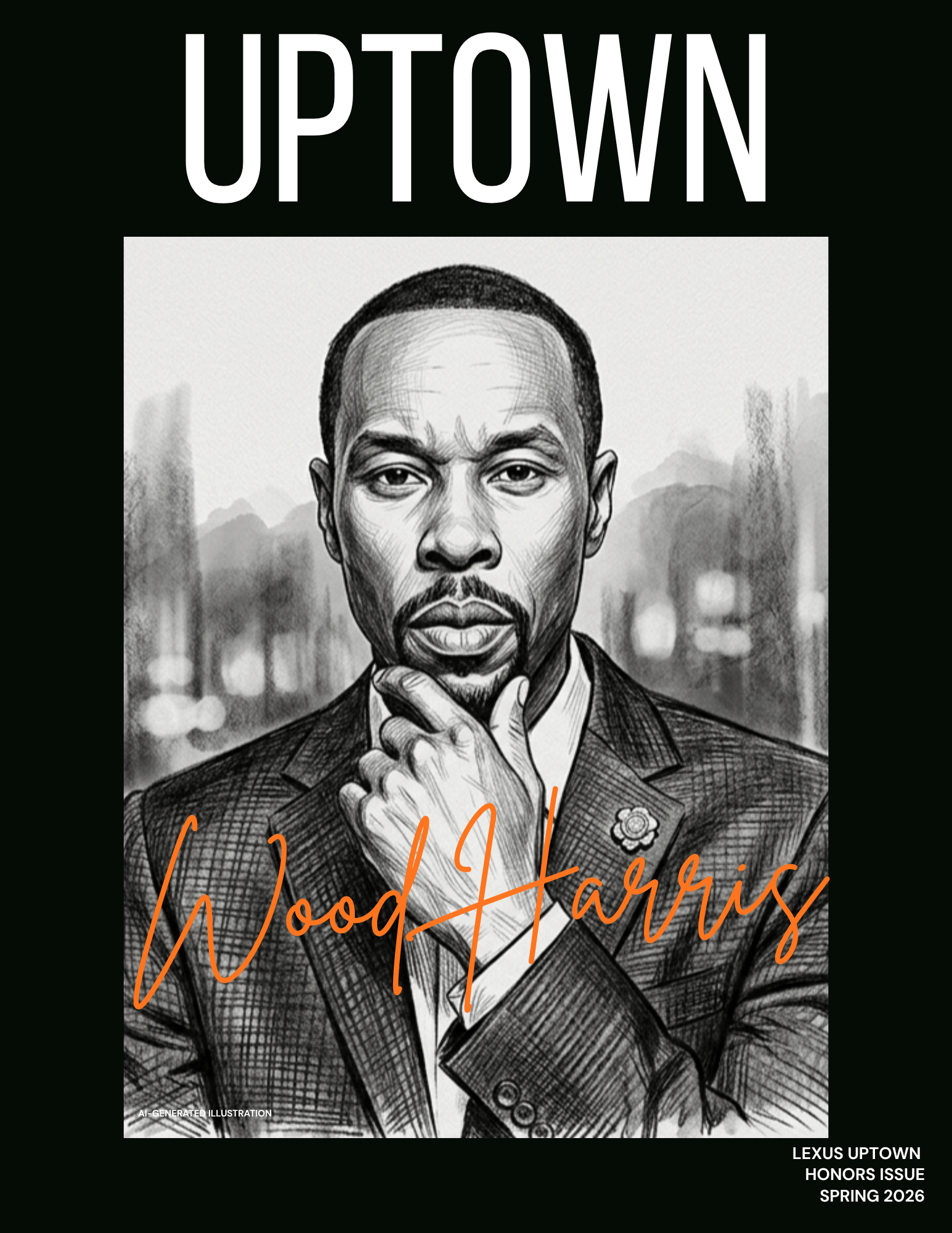
There’s something special about Wood Harris. Is it his ability to command each and every scene that embeds another jewel in the expansive crown that is his life’s career? Maybe. How about the specially curated, ironclad inventory of roles that, thanks to his riveting occupation, have served as pivotal markers of discourse in the conversation surrounding the Black men’s experience, on and off the screen? Not quite, but close. As the recipient of the Fearless Trailblazer Award at the 2026 Lexus UPTOWN Honors, Harris’ courage in portraying the many facets and nuances of Black manhood over the past 30-plus years puts him in a league of his own.
While the Chicago native has received critical acclaim for his role in the Oscar Award-winning film One Battle After Another, said praise can be likened to a school of fish swimming within an ocean of storytelling and achievement. Since 1994, we’ve seen Harris humbly and awe-inspiringly lean into competition through the lens of his art, effectively duking it out with previous versions of himself to become the ultimate storyteller after each role. Harris’ attention to detail and precision have elevated the current landscape of film and television, while cementing the thespian as one of the founding fathers of modern cinematic greatness. With a hefty track record of outstanding performances, including Paid In Full, the Creed franchise, The Wire, and Remember The Titans, Harris’ artistry serves as a masterclass on the beauty that transpires when passion meets purpose.
It’d be all-too fitting for Harris to conceptualize his own masterclass because, in all honesty, his career already serves as a modern-day blueprint of sorts. The storyteller’s innate ability to capture the range of emotions of his characters and to share such captivating performances is the type of selflessness that rings true when discussing biblical texts. It’s one thing to walk into the power you’ve been anointed with, but it’s another, all in itself, to share those gifts with the world. It’s probably why the duration of Harris’ career feels like a thinly disguised blessing for generations to come, in much the same way that we reflect on Black Hollywood greats like Danny Glover, Morgan Freeman, and Billy Dee Williams.
Our gratitude for Harris’ roles on and off the screen runs just as deeply as his love for his community, his fellow brothers. In using his professional trajectory as a vessel to bridge previous and future generations, his life’s work continues to serve as a love letter to other Black men, in entertainment or otherwise. His career demonstrates that our value rests beyond our creative output and that others can’t define us through narrow viewpoints. Harris has shown Black men that they can exist in all of the lovely yet flawed ways that they show up, and that these same behaviors make them beautiful and worthy of the same love they put out into the world.