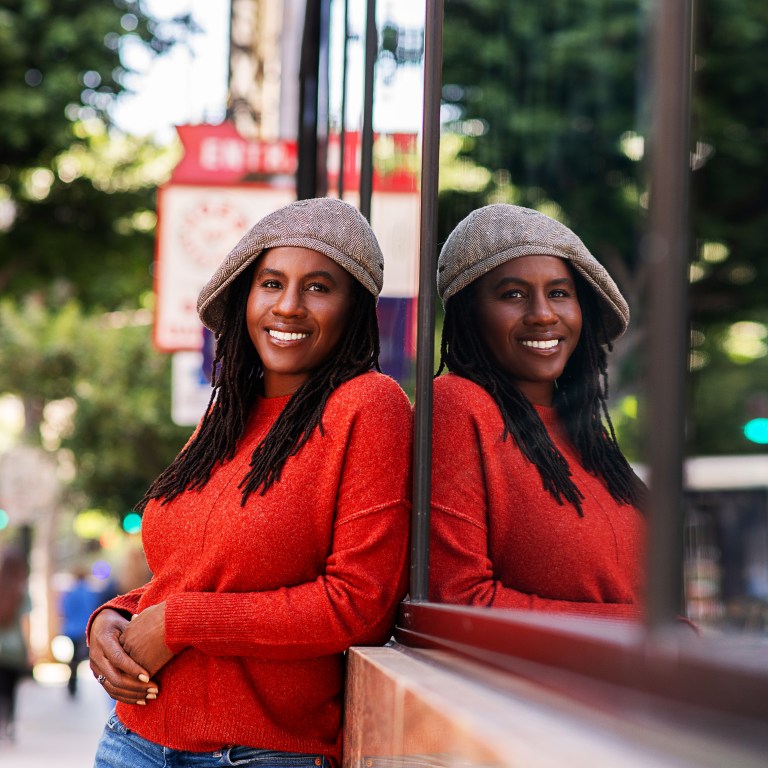


Shaina Rainford has the kind of résumé that makes ambition easy to quantify. She is a board-certified nurse practitioner and the founder and CEO of Bask & Lather Co., the bootstrapped textured haircare company she launched in 2020 after experiencing significant hair loss alongside her younger sister. What began with remedies rooted in her family has since grown into a nine-figure brand with millions of customers and national recognition.
Those accomplishments tell one story about Rainford. They don’t tell the whole one.
Away from the metrics and momentum, she is a mother, daughter, sister and friend who has become increasingly intentional about preserving the parts of herself that existed long before there was a company to run. As Bask & Lather has grown, so has her understanding that success is not only about how much she can build, but also how she wants to live while building it.

That distinction matters in a culture that often celebrates women for their ability to do it all, while placing an especially heavy expectation of strength on Black women. Ambition can become measured by output. Rest can feel like something that has to be earned. Being the person who can handle everything can quickly become an expectation to actually handle everything.
Rainford is challenging that idea in her own life.
She is still in an intense season of scaling Bask & Lather and makes no claim to have discovered the secret to work-life balance. There are meetings, opportunities, problems to solve and places she needs to be. For Rainford, the goal is not to create a perfectly divided life. It is to become more intentional about where her time and energy go.
That means recognizing that every request does not require immediate access to her. It means leaning on her team instead of assuming strength requires handling everything herself. Most importantly, it means protecting enough of herself to be present for her children, her family, her faith and the life she has outside of work.
Motherhood is a big part of that. When downtime appears, Rainford gravitates toward her children. Traveling together, going out to eat, finding something fun to do or simply spending time at home are not elaborate acts of self-care. They are opportunities to slow down, be present and enjoy the life she is working so hard to build.
Her faith has also become an important source of grounding. As her responsibilities have increased, Rainford says her relationship with God has deepened. She can work hard, prepare and make the decisions required of her while accepting that she cannot control every outcome. There is freedom in knowing the difference.

Perhaps the biggest shift, however, is in how Rainford thinks about strength.
“Black women are often taught to wear strength like a badge of honor,” she says. “We are expected to keep going, figure everything out, take care of everyone else, and rarely complain.”
Her experience has taught her that strength can take other forms. It can mean asking for help, setting a boundary, saying no, allowing yourself to be supported and resting when you can.
It is a lesson that reaches well beyond entrepreneurship. For many women, especially Black women and women of color, being capable can quietly turn into being endlessly available. Rainford’s evolving perspective makes room for something different: being powerful without proving it through exhaustion.
She is not becoming less ambitious. Her ambition is simply making room for more.
There is a business she wants to grow, but there are also children she wants to be present for, places she wants to travel, experiences she wants to have, relationships she wants to nurture and a life she wants time to enjoy.
Success, then, becomes more than revenue, growth or recognition. It also means having enough of yourself left to experience the life your ambition helped create.
As Rainford puts it, “Strength should not always have to look like struggle.”
And neither should success.