

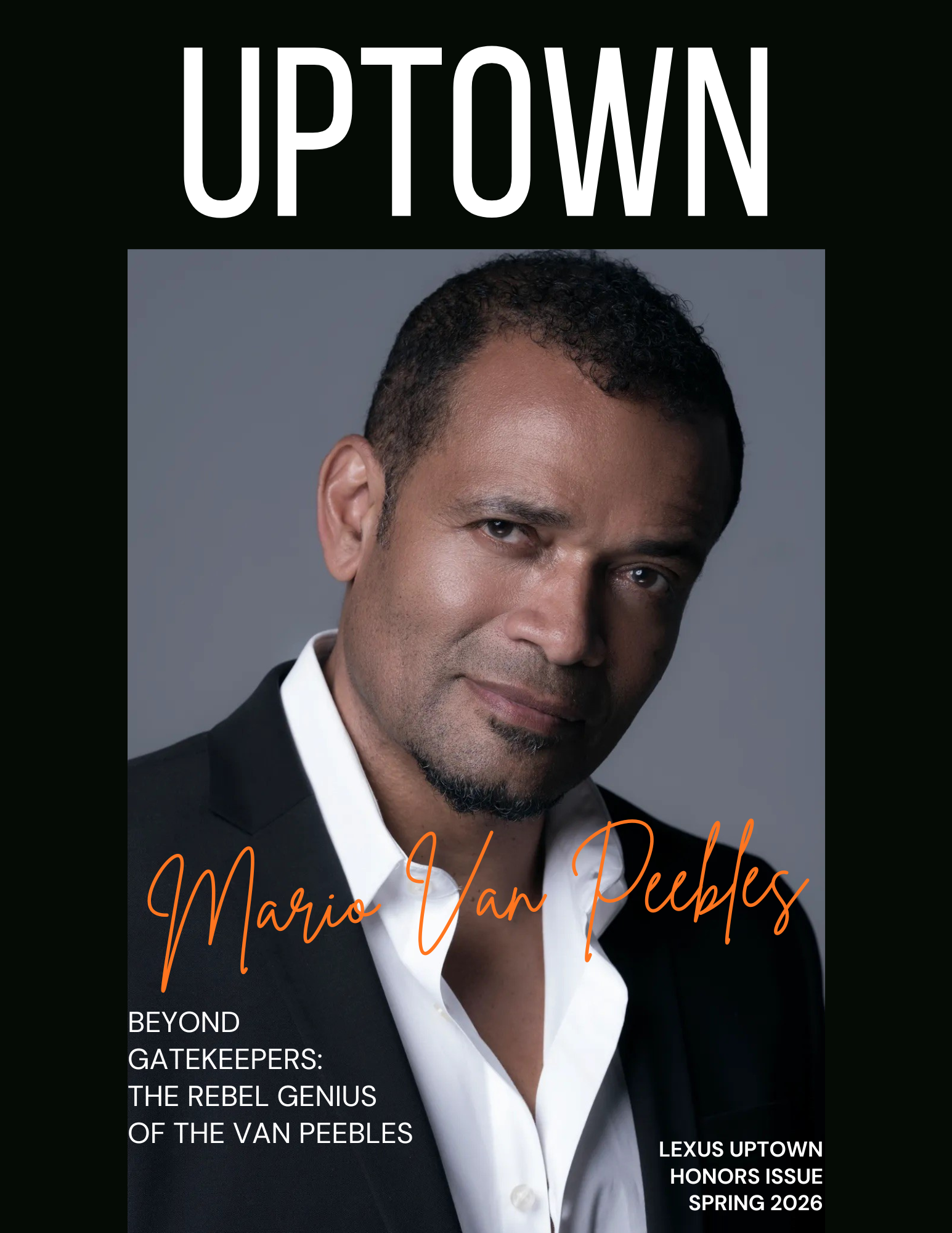
Historically, the term MVP has been designated to reflect individuals who excel at the highest levels of achievement, otherwise known as the most valuable player. For those of us who are true cinephiles and patrons of the visual craft, that abbreviation means something entirely different. When it comes to acclaimed actor, director, and writer Mario Van Peebles, there isn’t an acronym or distinction that quite encapsulates his greatness. Van Peebles possesses the kind of eminence that refuses to be defined by antiquated notions of achievement, including the inequitable opinions of faux, alabaster-complexioned Hollywood gatekeepers. The beloved auteur’s legacy lies in the carefully constructed cinematic universe that houses stunning visual architecture, in the form of well-produced works that bear the distinct honor of proximity to his greatness, be it in acting or directing. That same cinematic spectacle houses iconic films like New Jack City and Baadasssss!. It is the very one that Van Peebles paved brick by brick, melded together by the embers of his own fiery passion and steel-laced work ethic, that has also laid the foundation for the next generation of Black men looking for their own north star in an industry that commends everything but. When it comes to representation and mentorship, Van Peebles sheds light on his own relationship with the duo while reflecting on what it means to receive the Icon of Achievement Award at the 2026 Lexus UPTOWN Honors.
“Community matters more than ever. And we shouldn’t forget a simple truth: If others can make money from us, then we can make money from us. Coming together isn’t just spiritually healthy, it’s also good business,” the director said. “We also talk a lot about the power of imagery. Young people often grow up wanting to be the success they see. Kids who grew up watching the Huxtables saw an educated, accomplished, and loving Black family. White boys and girls who might never meet a Black person could one day conceive of voting for the Obamas. I grew up watching my father, Melvin Van Peebles, kick ass on the big screen. Later, I got to join him in that arena. My children, in turn, got to witness our family working together both on- and off-screen. My father gave me my very first lines in a film, and years later, I was able to give him his final lines in a film. That kind of generational circle is a rare blessing. Unfortunately, many Black men don’t have that mentorship dynamic with their fathers. Sometimes we have to create it ourselves. Without mentorship, we can become a broken line of success, each generation forced to reinvent the wheel instead of building on what came before.”
The concept of stewarding the next generation is, unfortunately, rarer than it should be. While Van Peebles’ longevity can be tied to his ability to amalgamate various facets of culture to weave together beautifully, nuanced portrayals of the Black male experience, his consideration ebbs further. It makes complete sense that the juggernaut would hold such a warm relationship with the idea of uplifting the next generation, given that his father and one of Hollywood’s original trailblazers, Mr. Melvin Van Peebles, bestowed upon him. When it comes to career-defining roles that’ve had a profound influence on him, from Heartbreak Ridge to Posse, the multi-hypehnate cites his role as the late Van Peebles in Baadasssss!.
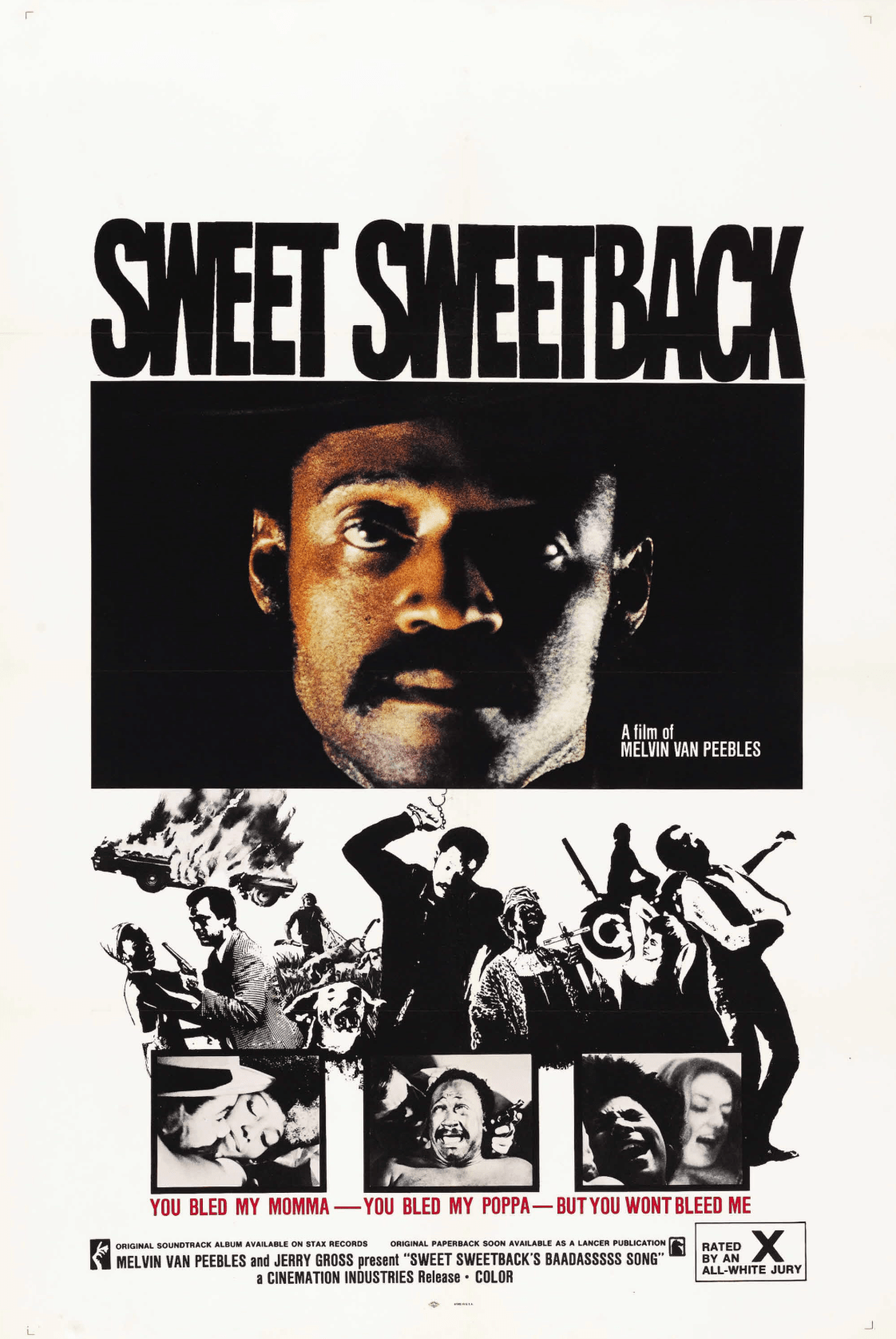
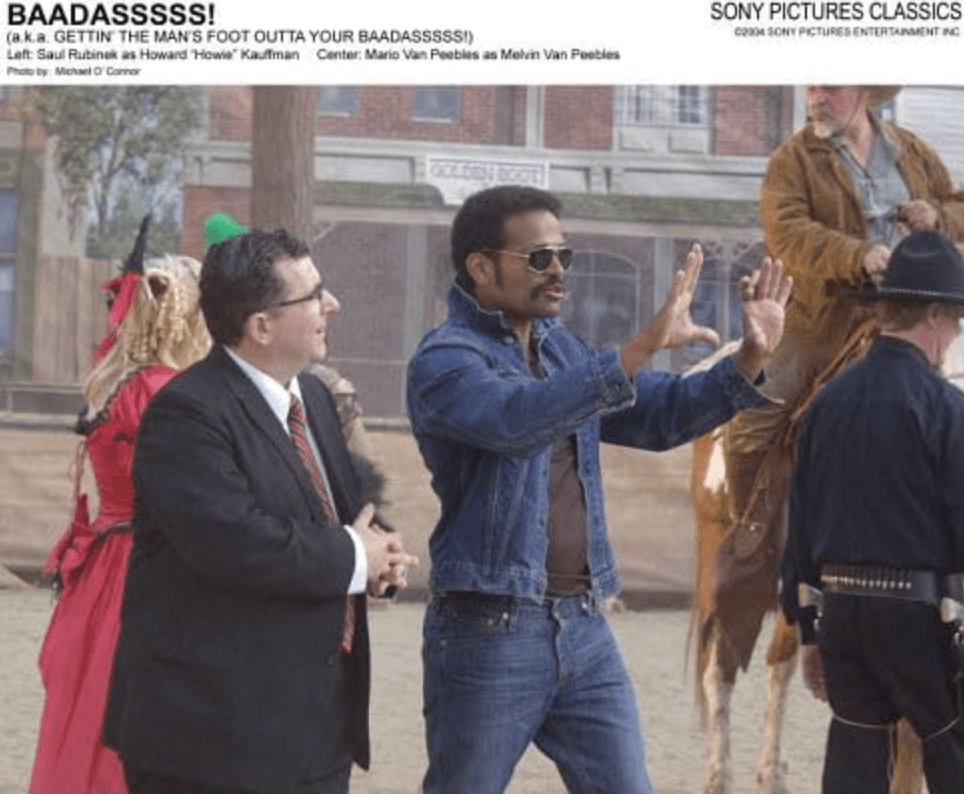
“I had the daunting task of portraying my father during one of the most turbulent periods of his life in my 2004 feature film Baadasssss!. He risked everything to transform the cinematic image of Black people from servants and ‘noble negroes’ into unapologetic Black power protagonists. I had actually been a kid on the set when he made Sweet Sweetback’s Baadasssss Song, helping out where I could. At the time, I saw flashes of the battles he faced, but I didn’t fully understand the war. My father defied the all-white male unions of the day and insisted that people of color be represented both in front of and behind the camera. He also discovered a young group called Earth, Wind & Fire, who went on to create a killer soundtrack for the film. Against all odds, his no-holds-barred revolutionary saga became the highest-grossing independent film up to that point. More importantly, he brought Black resistance to the screen. He paid a price for it, but the rest of us benefited. Afterward, Hollywood began trying to imitate his formula, urban films with radio-ready soundtracks and empowered Black protagonists. Movies like Shaft and Super Fly soon followed. Eventually, of course, the industry wore the genre thin, and what began as revolutionary soul cinema made by us slowly devolved into what some would later call ‘Blaxploitation,’ often made by them. When I finally portrayed my father as an adult in Baadasssss!, I began to understand the depth of what he had gone through. Channeling him forced me to confront something unexpected: In many ways, I was more like my father than I had ever wanted to admit.”
Given Van Peebles’ track record of successful film and television projects, indicative of the immense amount of talent and love he pours into them, it’d be a laborious task to imagine any obstacles on his journey. Especially given the Hollywood royal lineage from which he descends, it almost feels offensive to ideate on the ways his genius may have been tested along the way, given the rare combination of aptitude and pedigree. Still, even for the filmic trailblazer, Hollywood’s unique segment of white supremacy has not failed to rear its ugly head, even for someone of this legendary stature.
“As a filmmaker, there have been many moments where I had to decide what I was willing to trade to keep the overall vision of a project intact. For example, my father, Melvin Van Peebles, had known members of the Black Panther Party for Self-Defense who were big fans of Sweet Sweetback’s Baadasssss Song. He had written a book about the rise of their movement, and I convinced him to turn it into a screenplay. I brought him back into the Hollywood game, and we took the project around to several studio meetings. Some of the executives genuinely liked the material, but they had one caveat: They wanted to make one of the lead Black Panthers white.
“Their logic reflected a long-standing Hollywood pattern. Even though many of the greatest heavyweight champions, like Jack Johnson and Muhammad Ali, were Black, Hollywood focuses on a fictional white fighter named Rocky. Karate is an Asian martial art, yet the hero of The Karate Kid doesn’t get to be Asian. And Dances with Wolves won’t star a Native American in the lead role. The thinking at the time was that the dominant culture had to see itself reflected in a dominant way for a film to be considered economically viable. Of course, I didn’t go for that. I had to find a way to convince the studio that Panther would be stronger and more truthful if we told the story authentically.


“In some ways, Panther functions like a prequel to New Jack City. It touches on the idea that the drugs devastating Black communities were not simply an accident. In New Jack City, the gangster says, ‘We don’t have poppy fields in the ghetto or gun manufacturing plants. How does it all get here? It’s big business.’ If you follow the money, it moves very quickly out of Black and Brown hands. That wasn’t exactly a message the establishment was eager to amplify. Even though Panther won awards, it can still be surprisingly difficult to find to this day. Sometimes it feels like it’s harder to find than the full Epstein files.
“I faced similar choices when making Baadasssss! I was offered a larger budget if I would turn it into more of a comedy, something closer in tone to Soul Plane, but that wasn’t the film. My father’s life was political, sexy, complicated, and yes, sometimes funny, but it was never meant to be a joke. So I took less money and made the film the way I believed it should be made. I ended up selling it to Sony Pictures Classics, and it went on to win ‘Best Film of the Year’ from Roger Ebert. I had to make the film independently—the same way my father made Sweetback. And the old man loved that.
“At the end of the day, you have to know what truly matters to you and be willing to fight for it. More broadly, if we’re not vigilant, society has a way of shrinking us as human beings. That’s not just a challenge for filmmakers, it’s a challenge for everyone. Malcolm X said, ‘Freedom by any means necessary.’ But sometimes we shortchange ourselves by replacing that with ‘Get paid by any means necessary.’ We begin to conflate money with freedom. Crack cocaine made money, but it destroyed communities. Fossil fuels make money, but they poison the planet. Today’s oligarchs may generate enormous profits, but we have to ask: What are they giving back in return? When we adopt the values of a system that once bought and sold us as human beings, we have to ask ourselves: What have we become? That’s why it’s important to periodically reevaluate and recalibrate to make sure we’re not blindly following the colonizers over the ecological cliff. Racism is connected to sexism. Sexism is connected to classism. And all of it is tied to the exploitation and commodification of nature itself. If we worship unrestrained, unconscious capitalism, we help push humanity toward its own destruction, and we become complicit in that outcome. We’re living in a time where demanding clean water can get you labeled a radical, while polluting the water earns you tax breaks and legal protection.
“If we saw a monkey hoarding hundreds of bananas while other monkeys starved right in front of him, we’d think something was wrong with that monkey. But when a human being does the same thing, we often praise him as successful and give him another tax break. As original peoples, we have to remember the wisdom of our ancestors and combine it with the tools and technology of the modern world.”
While Van Peebles is (and rightfully so) lauded as a vanguard of the industry’s exclusive class of literati for his genre-bending art and abundance of star power that never seems to dim, his legacy will continue to inspire generations. His endowment to art and culture, be it classic films that showcase the complexities of Black manhood or projects that so eloquently distinguish his rightful position as Hollywood’s elder, he’s in a league of his own. When musing about advice he’d offer to the next class of filmmakers and creatives looking to ensure similar gains, Van Peebles emphasizes the importance of well-roundedness.
“First, I would say reflect on why you really want to be in the entertainment business. People arrive here for all kinds of reasons. Some want fame. Some think it’s a way to meet women or men. Some were nerds in high school and see Hollywood as their Revenge of the Nerds opportunity. Others believe they can make a quick dollar. And some, whether they realize it or not, come here to self-destruct. Hollywood can feel like high school with money. And that’s a very flashy place to crash out. But some people come here because they genuinely want to do good work. Some of them even have something meaningful to say. Maybe they’re not trying to make a movie that’s just a copy of the last box-office hit. Maybe they actually have a vision and want to create something original. To those filmmakers, I would repeat what my father, Melvin Van Peebles, always told me: ‘Keep on keeping on.’”
“The second thing I’d say is find your own voice – not just as a filmmaker – but as a human being who may find himself in a position of leadership. Filmmaking isn’t just about scripts and cameras. At a certain point, it’s about people. And that’s when your people skills really matter. As the saying goes, ‘wherever there are people, there’s going to be some poo, stepping around it is up to you.”’ This business tends to magnify whoever you are. If you’re OK with that, that will show. If you’re not, that will get magnified too. It’s a long road, so treat people well. Even when your career gets cold, and it happens to everybody, those same people may help warm things back up again.
“The third note is to study your craft relentlessly. Know the history, understand the storytelling, and keep up with new technologies as they evolve. The tools change, but the discipline of good storytelling never goes out of style.
“Fourth, expand your vision. Travel. Go to Africa. Learn other languages. Spend time with people who don’t think like you or vote like you. Stay intellectually curious. If you don’t live life, you won’t have life to put into your work.
“And finally, remember that whether we like it or not, politics affects the creative world. As we’ve learned, if we don’t engage with politics, politics will eventually engage with us. So stay vigilant. Use your voice and whatever platform you have to encourage people to vote for leaders who respect the First Amendment and understand the importance of free expression. Because if that freedom disappears, filmmakers and storytellers lose the very space we need to do our work and to think freely.”
Watch Mario Van Peebles accept the 2026 Lexus UPTOWN Honors Icon of Achievement Award below.